Blog · November 3, 2026
How to Market an Indie Game: A Practical Plan
To market an indie game, start earlier than feels comfortable: find the one sentence that makes your game interesting, show short gameplay clips from the first playable version, put up a store page so interest turns into wishlists, reach out to streamers and press who cover your genre, and build a small community that you talk to every week. You do not need a big budget. You need a clear hook, steady posting and a game that looks good in a five-second clip.
This guide turns that into a plan you can actually follow, whether you are three months or three years from launch.
Why marketing starts long before launch
Most small games that launch to silence did not fail on launch day. They failed in the year before it, when nobody outside the team had heard of them. Players need to see a game several times before they care, and every channel, from social media to store algorithms, rewards games that already have some attention.
A good rule: the moment your game has one thing that looks fun in motion, start showing it.
Step 1: Find your hook
Your hook is the short answer to "why would I play this instead of the thousand other games out this month?" It is usually one of these:
- A twist on a familiar genre. A farming game where the crops fight back.
- A striking look. An art style people recognise in one frame.
- A feeling. Cosy, tense, funny, sad, competitive.
- A clear fantasy. Run a haunted hotel, pilot a tiny submarine, rebuild a city.
Write it as one sentence and test it on friends. If they ask a follow-up question, it is working. If they nod politely, keep going. Your game design document is a good place to keep it, so every design decision supports the hook.
Step 2: Make your game easy to show
Marketing runs on short clips and screenshots, so make your game easy to capture.
- Pick a readable art style and strong colours. Our guide to game art for non-artists covers this.
- Make the core action obvious in a few seconds of footage.
- Add small moments of juice: screen shake, particles, a satisfying sound. See sound effects for indie games.
- Build one area that looks finished, even if the rest is grey boxes. That area is your marketing set.
Step 3: Put up a store page early
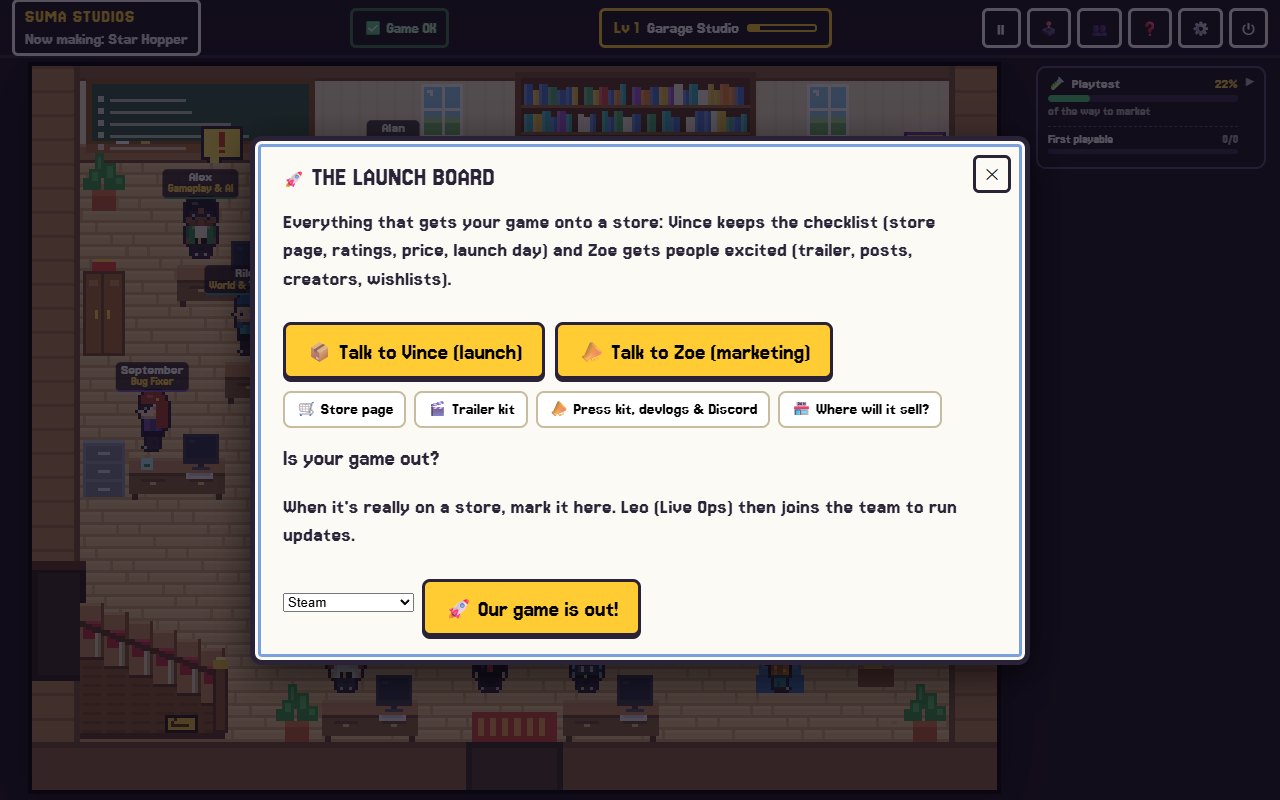
If you are releasing on PC, a "Coming Soon" store page turns passing interest into wishlists, and wishlisters hear from the store when you launch. Many developers put their page up months before release. Our step-by-step guide to launching an indie game on Steam covers the page itself: capsule art, screenshots, the trailer and tags.
For Roblox or Fortnite games the idea is the same, but your "store page" is the experience or island page and its thumbnail. See Roblox vs Fortnite UEFN for how discovery differs on each.
Step 4: Pick two channels and post steadily
You cannot be everywhere. Pick two places where players of your genre already spend time, and post there regularly.
- Short video (TikTok, YouTube Shorts, Instagram Reels): clips of the core action, weird bugs, before-and-after comparisons.
- X and Bluesky: GIFs, devlog threads and community hashtags like screenshot days.
- Reddit: genre subreddits and game development communities. Read each subreddit's rules first, join the conversation, and do not just drop links.
- Devlogs: a regular written or video update on how the game is coming along. They build trust and give press something to quote.
Consistency beats volume. One good clip a week for a year does more than twenty posts in launch week.
Step 5: Reach out to creators and press
Streamers and YouTubers are often the biggest driver of attention for small games. To reach them:
- Make a list of creators who play games like yours, at a size where your email will be read.
- Write a short, personal email: who you are, the hook, a clip or trailer link, and an offer of a key.
- Keep a simple press kit ready: description, features, screenshots, trailer, logo and contact details.
- Follow up once, politely, then move on.
Smaller creators who love your genre often lead to bigger ones, so do not skip them.
Step 6: Build a community you actually talk to
A Discord server or a mailing list gives your earliest fans a home. Share work in progress, ask their opinion, invite them to playtests and thank them by name. Early players who feel heard tell their friends. Our guide on how to playtest your game explains how to turn that community into useful feedback.
Step 7: Use events and demos
Festivals, showcases and demo events give small games a burst of attention. On Steam, many developers plan around Steam Next Fest with a polished demo; check Valve's Steamworks documentation for current dates and rules. A short demo that ends on a high note is one of the best ways to earn wishlists.
How Suma helps with marketing
In Suma Studios, marketing is part of the plan rather than an afterthought. As your game gets close to launch, Zoe joins to help with marketing, Vince helps with publishing, and Dex looks after your community and Discord. The team helps you write the store page, trailer plan, press kit and devlogs, and the chalkboard keeps launch tasks alongside the building work.
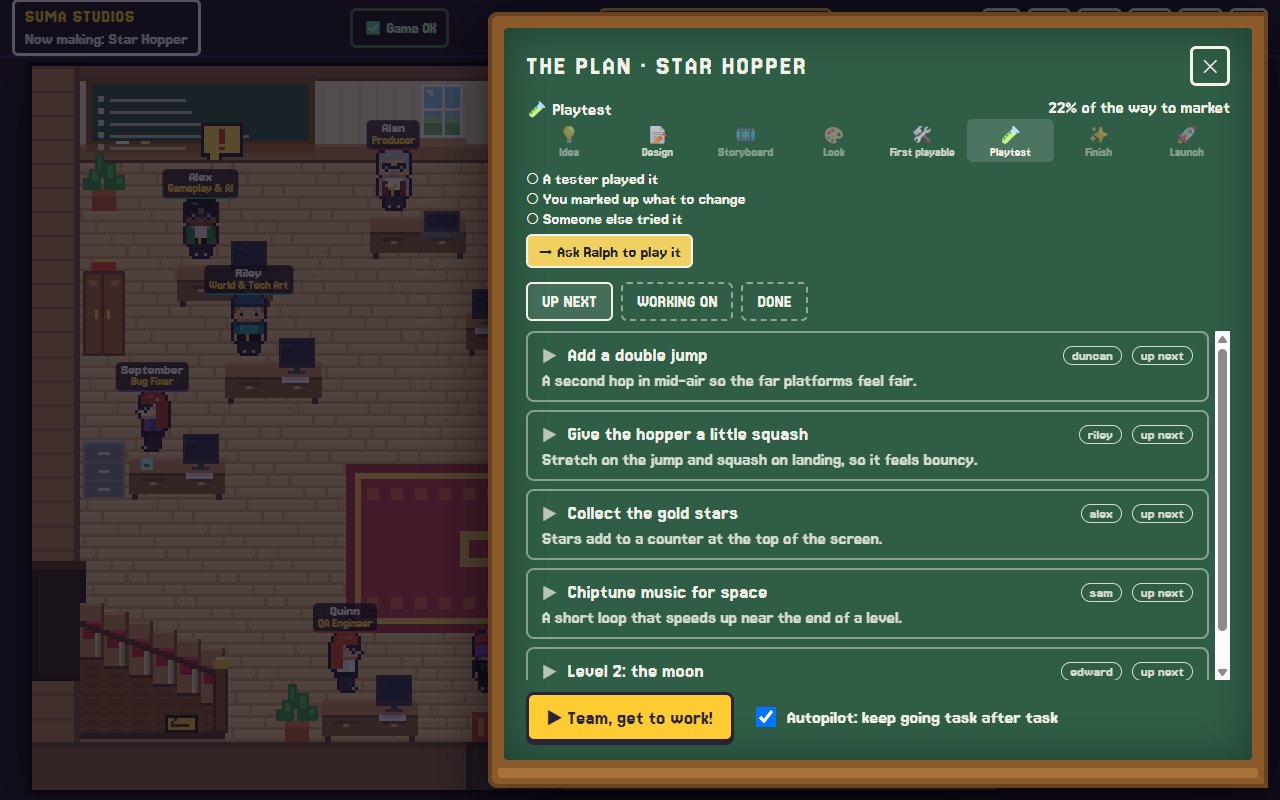
They help with the writing and planning, but posting, replying to people and building real relationships with creators is still your job, and it is the part that matters most.
FAQ
When should I start marketing my indie game?
As soon as you have something that looks fun in motion, often around the first playable version. Earlier is almost always better than later.
How much should I spend on marketing an indie game?
Many small games launch with almost no paid marketing and rely on clips, creators, festivals and community. Paid ads can work, but test small amounts first and measure the results.
What is the best social media platform for indie games?
There is no single best one. Go where players of your genre already are, and choose short video if your game looks good in motion.
Do I need a trailer?
For a PC store page, yes. Keep it short, show gameplay in the first few seconds and end with a clear call to wishlist or play.
Start with a game worth showing
Marketing is easier when the game looks great early. Try Suma free to build one game up to its first playable version, then start sharing clips while your team keeps building.
Make your game with an AI team
Suma Studios is a pixel-art game studio on your computer. Tell your team what you want, and they build it in Godot, Unreal, Roblox or Fortnite.